The more unequivocal the international community's stance against "Taiwan independence" separatist activities, and the more resolute its commitment to the one-China principle, the more assured peace and stability will be across the Taiwan Strait, the Chinese delegation said here.
The Chinese delegation made the remarks when refuting Japan's false rhetoric regarding the Taiwan Strait at the ASEAN Regional Forum and the East Asia Summit Foreign Ministers' Meetings held in Manila, the Philippines.
China will never allow "Taiwan independence" separatist forces to split Taiwan from China in any name or by any means, said the delegation.
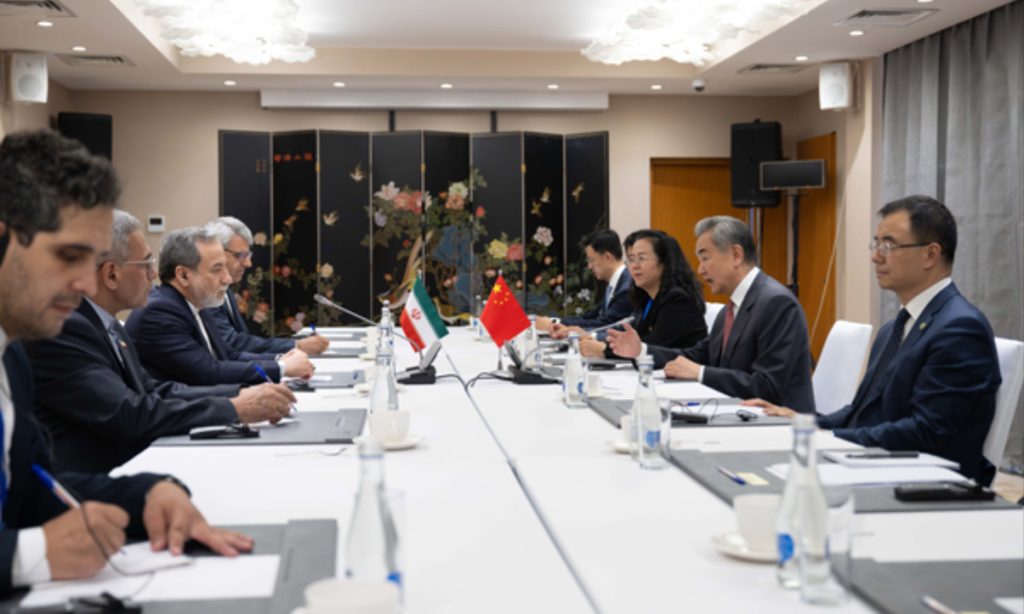
Chinese Foreign Minister Wang Yi called for an early resumption of dialogue and negotiations among the relevant parties and the proper handling of issues concerning the Strait of Hormuz during a meeting with Iranian Foreign Minister Seyed Abbas Araghchi in Kyrgyzstan on Friday. Araghchi thanked China for consistently promoting peace and dialogue and expressed hope that it would continue helping ease regional tensions, according to a statement from the Chinese Foreign Ministry.
The meeting took place on the sidelines of the Meeting of the Council of the Ministers of Foreign Affairs of the Shanghai Cooperation Organization Member States, the Xinhua News Agency reported on early Saturday.
Wang said China is deeply concerned about the renewed escalation of tensions in the Middle East and the Gulf region. The memorandum of understanding (MoU) signed more than a month ago was a valuable outcome of mediation efforts by multiple parties and reflected the aspirations of the Iranian people and the peoples of the region for peace and stability, he said, stressing that the progress achieved through dialogue should not be abandoned.
"The door to negotiations, once opened, should not be closed, and as long as there is hope for peace, it should not be given up," Wang said.
The immediate priority is to resolve differences through dialogue and negotiations and resume implementing the consensus reached in the MoU, Wang said. As Iran's comprehensive strategic partner, China firmly supports Iran in safeguarding its sovereignty, security and national dignity, he added.
China will continue to act in line with the four-point proposal on maintaining and promoting peace and stability in the Middle East, support mediation efforts by Pakistan and other parties, facilitate the early resumption of dialogue and negotiations, properly address issues related to the Strait of Hormuz, improve relations among neighboring countries and advance collective security among Gulf states, Wang said.
Such efforts are aimed at helping restore peace and stability in the Middle East at an early date, he noted.
Araghchi briefed Wang on the latest developments in the Middle East and the Gulf region. He said Iran's willingness to negotiate had never changed and that Tehran did not wish to see the conflict continue, urging the US to honor its commitments, exercise restraint, work with Iran toward the same goal and seek a reasonable solution, according to the statement from the Chinese Foreign Ministry.
At the current critical moment, it is crucial for Iran and China, as comprehensive strategic partners, to strengthen communication and coordination, Araghchi said. He thanked China for consistently maintaining an objective and impartial position and promoting peace and talks and expressed hope that China would continue playing an important role in helping de-escalate the situation.
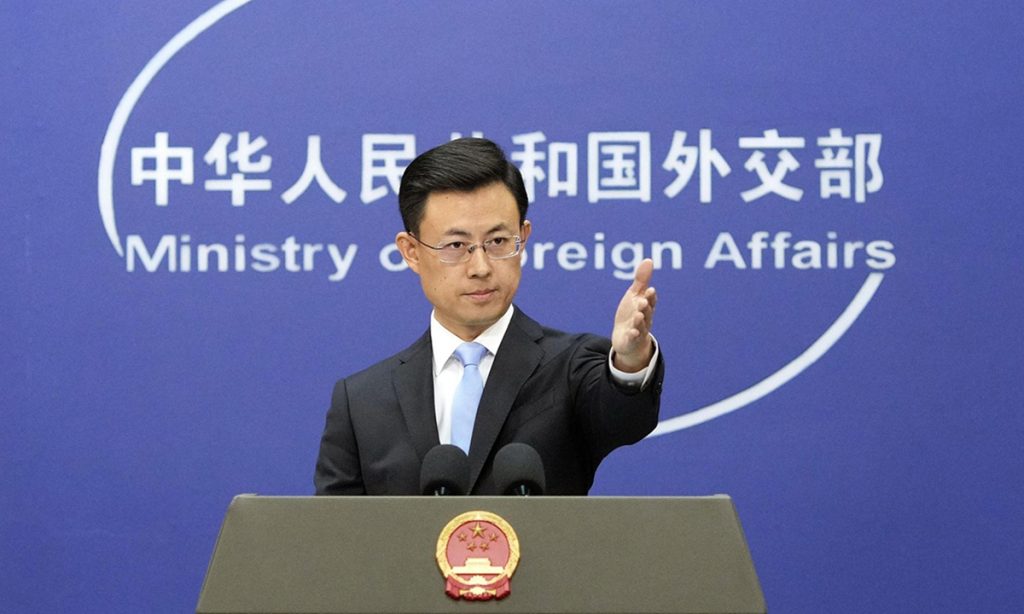
Both China and four Nordic countries pay high attention to the development and governance of AI, and the two sides agreed to strengthen dialogue on global AI governance and explore rules on collective governance, Chinese foreign ministry spokesperson Mao Ning said on Tuesday.
Mao made the remarks at a regular news briefing when asked for information about Chinese Foreign Minister Wang Yi's visit to Denmark, Sweden, Finland and Norway from July 2 to 7.
"The four countries are a powerhouse for scientific and technological innovation. China welcomes businesses from both sides to leverage their respective advantages and pool strength for coordination so as to deliver more for our people with innovation outcomes," Mao said, adding that the four countries appreciated the principles put forward by China, namely people-centered approach, AI for good, fairness, inclusiveness and collaborative governance.
During the trip, Wang held talks with his counterparts and had friendly exchanges with leaders of the four countries. The two sides agreed to carry forward traditional friendship, maintain high-level exchanges, step up strategic communication, expand comprehensive cooperation, and strive for new development in bilateral ties, Mao said.
Wang welcomed businesses from the four countries to walk into the "fitness club" of the Chinese market to build their strength and share in the opportunities offered by China's mega market, complete industrial chains, and diversified application scenarios. The four countries welcomed more constructive economic and trade dialogues between China and Europe, and supported the effort of properly handling economic and trade frictions, seeking win-win solutions, and achieving substantive outcomes, Mao said.
The four countries agreed to work with China to strengthen multilateral communication and collaboration, safeguard the authority and the role of the UN, and work for a more just and equitable global governance system, she added.
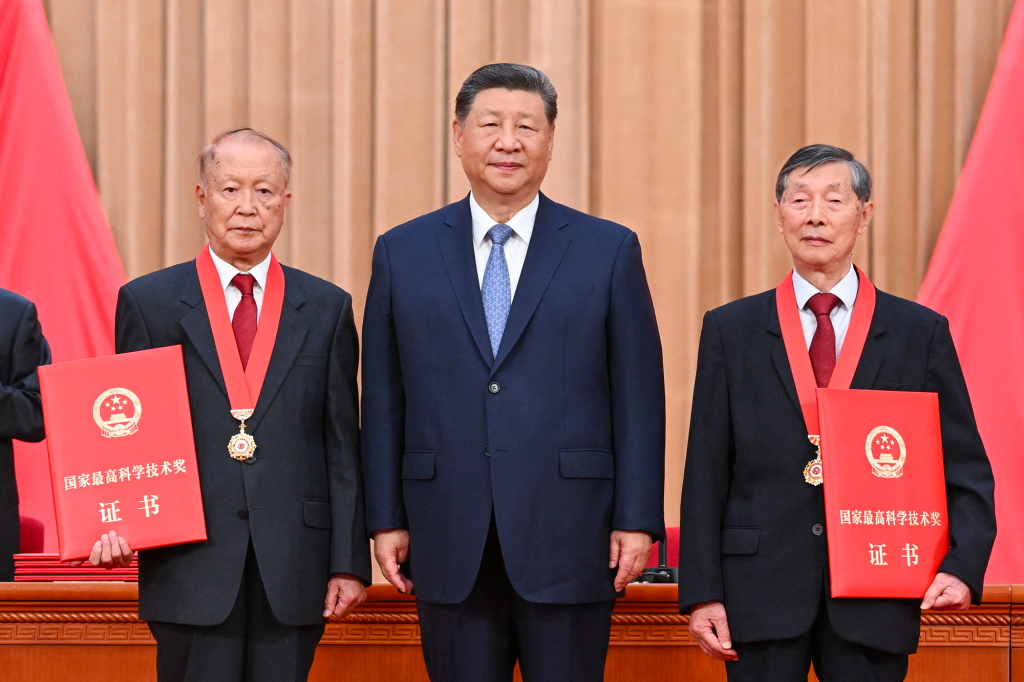
Chinese President Xi Jinping presented the country's top sci-tech award and delivered an important speech at a meeting in Beijing on Wednesday, the Xinhua News Agency reported.
The meeting brings together the national science and technology award conference, the general assemblies of the members of the Chinese Academy of Sciences and the Chinese Academy of Engineering, and the 11th national congress of the China Association for Science and Technology.
Wednesday's meeting honored 258 projects and 11 scientific and technological experts. Among them, 51 projects received the State Natural Science Award, 58 projects were awarded the State Technological Invention Award, and 149 projects received the State Scientific and Technological Progress Award.
Founder of China's lithium battery sector Chen Liquan and radar technology expert Ben De were presented with China's top sci-tech award for the year 2025 on Wednesday.
Besides presenting China's top sci-tech award to Chen and Ben and shaking hands with them, Xi, along with other Party and state leaders and two top-award winners, presented certificates to representatives of recipients of other awards.
Prior to the ceremony, Xi and other leaders met warmly with all representatives of winners of the State Scientific and Technological Progress Award and posed for group photos with them, per Xinhua.
Innovation drive
In his speech on Wednesday, Xi called for accelerated efforts to achieve high-level self-reliance and strength in science and technology, and leverage sci-tech innovation to underpin and drive Chinese modernization, Xinhua reported.
He said the 15th Five-Year Plan period (2026-30) is a critical phase for tackling tough challenges in building up the country's strength in science and technology.
"We must seize the historic opportunity, rise to the challenges of the times, accelerate efforts to achieve high-level self-reliance and strength in science and technology, and make steady progress toward the 2035 goal of becoming a leading country in science and technology," he said, per Xinhua.
"The achievements of the two academicians who received this year's top honor in science and technology represent core accomplishments in both safeguarding national security and advancing scientific innovation, while also driving China's green transition and strengthening its national defense capabilities," Chinese engineering expert Song Zhongping told the Global Times on Wednesday.
Their work serves as a benchmark for meeting the country's strategic needs and enhancing its capacity for independent innovation, Song said.
Chen, born in 1940, is a researcher at the Institute of Physics under the Chinese Academy of Sciences, and an academician of the Chinese Academy of Engineering (CAE). He is widely recognized as the founder, pioneer and leader of China's lithium battery sector.
Chen built China's first solid-state ionics laboratory from scratch. His team produced China's first lithium-ion battery and established the country's first pilot production line using entirely homegrown technology, equipment and raw materials, according to Xinhua.
He pioneered and realized the in-situ solidification battery technology approach, advancing sodium-ion batteries from fundamental research to commercial-scale deployment, and cementing China's strategic lead in next-generation battery technologies.
Ben, born in 1938, is a researcher at the China Electronics Technology Group Corporation and also a CAE academician. He is acclaimed as the founder of China's airborne pulse Doppler radar technology, a major pioneer of phased array radar technology, and a forerunner of space-based surveillance radar technology.
Ben successfully developed China's first airborne pulse Doppler fire-control radar and its first large-scale long-range phased array early-warning radar. The two fundamental modern radar technologies he pioneered, pulse Doppler and phased array, have guided the development of China's land, sea, air and space early-warning and detection systems.
Song noted that this year's list of awardees shows a clear emphasis on original homegrown innovation, particularly in technologies related to national security. As a result, the awards are no longer focused primarily on practical applications, as they were in the past, but place greater weight on breakthroughs in fundamental science.
In particular, priority has been given to overcoming key technological bottlenecks, such as semiconductors, chips, new materials, and other areas that remain among China's greatest technological challenges. Many of this year's award-winning achievements have filled critical domestic gaps and addressed long-standing weaknesses in strategically important industries, Song said.
"The great honor shines on every one who works in the battery industry," said Yang Quanhong, a professor at Tianjin University and an expert in battery technologies, who has worked closely with Academician Chen.
"In the late 1970s, starting from scratch and keeping pace with the world, Chen pioneered solid‑state ionics and secondary battery research in China with his keen scientific acumen. He then drove the birth and rapid growth of China's lithium battery industry through technological innovation - an industry that has now become the undisputed global leader," Yang told the Global Times.
"Today, the all‑encompassing supporting role of lithium batteries and new battery technologies for future industries in China is becoming ever more critical… As peers in the field, we are truly inspired," Yang noted.
Promoting humankind progress
In addition to the two recipients of the top award, nine experts were conferred the China International Science and Technology Cooperation Award on Wednesday.
China is accelerating its transformation from a participant and contributor to a pioneer and leader in global science and technology, making it one of the fastest-rising economies in innovation, Xi said, per Xinhua.
He called on Chinese scientists to be deeply involved in the global governance in science and technology, offer Chinese wisdom, and make greater efforts to promote the building of a community with a shared future for humanity.
As early as 2018, at China's top sci-tech gathering, the Chinese leader has put forward similar propositions. He called on Chinese scientists to offer Chinese wisdom and make greater efforts to promote the building of a community with a shared future for humanity. "While achieving its own development, China will bring benefits to more countries and their peoples and promote balanced development around the globe," he said in 2018, per Xinhua.
So far, China has shared the BeiDou Navigation Satellite System, the anti-malarial drug artemisinin and hybrid rice with the world to address common challenges. China has also opened 10 major pieces of scientific research infrastructure, including the FAST telescope and the deep-sea manned submersible Fendouzhe, to global scientists and engineers.
Wang Yiwei, a professor at the Renmin University of China, told the Global Times that this year's award-winning projects cover not only disciplines serving major national strategic priorities, including physics, chemistry, biology, advanced materials and mineral exploration, but also key fields such as food security, disaster prevention and mitigation, low-carbon development, and landmark national sci-tech initiatives represented by FAST.
"These achievements demonstrate that China's scientific and technological agenda is not only focused on meeting its own development needs but is also aimed at contributing to global progress," Wang said, "The benefits extend beyond China to other countries and, ultimately, to humanity as a whole, underscoring the broader significance of science and technology for the common good and international cooperation."
Therefore, these awards recognize not only scientific and technological excellence itself, but also contributions that advance the progress of humankind, Wang said.
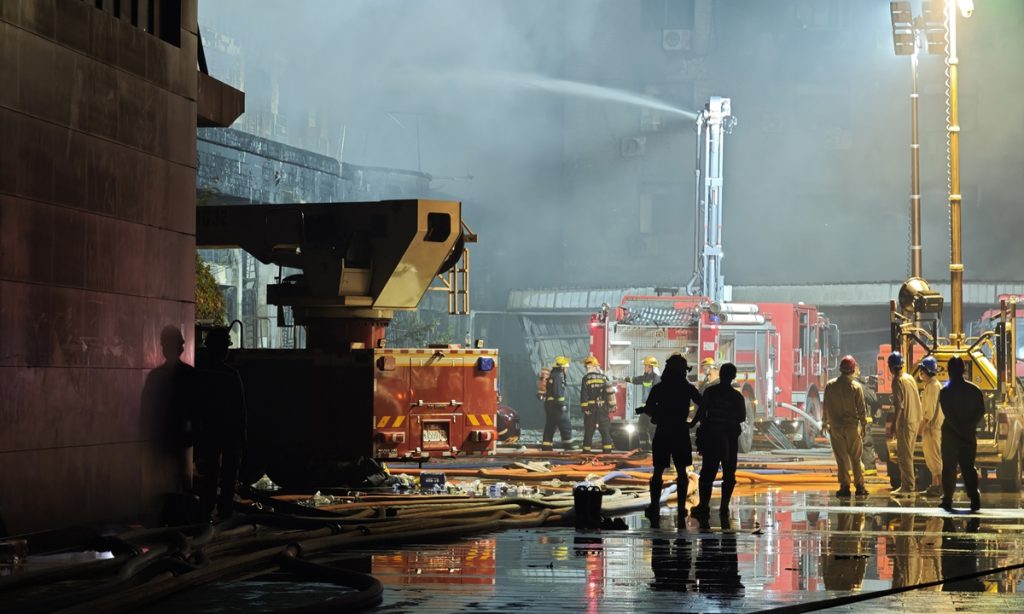
Chinese President Xi Jinping has urged full efforts in search-and-rescue operations after a fire at a shoe factory caused major casualties Thursday in Jinjiang City, east China's Fujian Province, Xinhua News Agency reported on Thursday.
Xi, also general secretary of the Communist Party of China (CPC) Central Committee and chairman of the Central Military Commission, said in an instruction that efforts must be made to identify the cause of the accident and hold those responsible strictly accountable.
Noting that multiple major workplace safety accidents have occurred in the country since the beginning of this year, Xi required all regions and relevant departments to draw profound lessons from these accidents, better coordinate development and security, and remain constantly vigilant about workplace safety, per Xinhua.
Efforts must be made to thoroughly identify and root out all types of safety risks and hidden hazards, ensure that workplace safety measures are implemented meticulously, resolutely prevent major and serious accidents, and effectively safeguard people's lives and property, Xinhua reported.
The fire, which broke out at around 12 pm on Thursday, has killed 28 people as of press time, Xinhua reported, citing local authorities.
At approximately 12:04 pm on Thursday, a fire broke out at Huiteng Shoe Industry Co., Ltd in Chendai town.
A total of 183 firefighters and 35 fire engines were sent to the scene. As of now, the open flames have been extinguished, and the exact cause is still under investigation. Firefighters said that a large amount of clutter had been piled up in the factory building's stairwells, severely hampering firefighting efforts and hindering rescue operations, according to China Central Television (CCTV) News in its latest coverage of the development.
The company's head and relevant personnel have been placed under investigation, and the company's accounts have been frozen, a staff member surnamed Xie from the local publicity department told the Global Times in a phone interview at around 10 pm. He also said the fire had been brought under control, with all open flames extinguished at around 3 pm on Thursday afternoon, while firefighters remained at the site for follow-up operations.
"After the fire, the site still requires further handling, such as continuous cooling to prevent secondary or subsequent disasters. That is why firefighting forces have not yet withdrawn," the staff said.
Firefighters, medical personnel and other emergency responders remained at the scene to continue rescue and response efforts. "Workers and others who have been confirmed safe have already been guided to a secure area for further arrangements and follow-up procedures. Those still at the scene are mainly emergency personnel, including firefighters and medical workers," he said.
The rescue operation is still ongoing, according to Xie. A staff member from the Fujian Provincial Emergency Management Department also told the Global Times Thursday evening that the city's major officials and officials in charge of relevant departments rushed to the scene immediately after the fire broke out. Emergency management, fire rescue, public security and health authorities in Jinjiang remained at the site to coordinate response efforts, while a deputy director-general of the provincial emergency management department had also arrived at the scene.
Several social media users with IP locations in Fujian posted photos and videos from the scene, showing flames on the roof of a building and thick smoke billowing into the sky. Some users said they had witnessed helicopter-assisted rescues there. In response, Xie, a staff member from the local publicity department, confirmed to the Global Times that helicopter had indeed been deployed during the day to evacuate people from the rooftop.
A Xiaohongshu user with the username "yukiko", whose IP location shows Fujian, told the Global Times Thursday evening that her mother works at a company nearby and told the family that employees there had witnessed the rescue operation, including the use of helicopters.
"The fire site is about eight kilometers from my home, but we could still see extremely thick smoke from the blaze during the day. I also saw many ambulances heading there on my way to work today. I know the roads around the shoe factory area have always been narrow, which may have made it difficult for fire trucks to enter," she said.
Factory, town and industry
Xinhua previously reported that Chendai, a town under Jinjiang City, has been dubbed "China's Shoe Capital." Covering 38.84 square kilometers, the town is home to more than 7,000 footwear manufacturers and related upstream and downstream enterprises. It has nurtured several leading domestic sportswear brands, with annual sports shoe output exceeding 1 billion pairs and annual output value of finished shoes surpassing 50 billion yuan ($6.9 billion)
Jinjiang is one of China's leading footwear manufacturing hubs and the world's production base for sports shoes. According to official records, Jinjiang's footwear and apparel industry generated an annual output value exceeding 250 billion yuan ($36.74 billion) in 2024, with annual sports shoe production surpassing 1.2 billion pairs — accounting for 20 percent of global output.
Xinhua reported, citing information obtained from the scene, that the factory building is a five-story reinforced concrete structure, with each floor covering about 1,300 square meters. The first floor houses the punching workshop and warehouse; the second floor is used for semi-finished shoe materials and finished shoe storage; the third floor contains the production lines; the fourth floor is the sewing workshop; and the fifth floor serves as a warehouse for the production lines.
The fire originated in the first-floor punching workshop, where the materials involved were shoe components, which are highly flammable and can allow flames to spread quickly, according to the report.
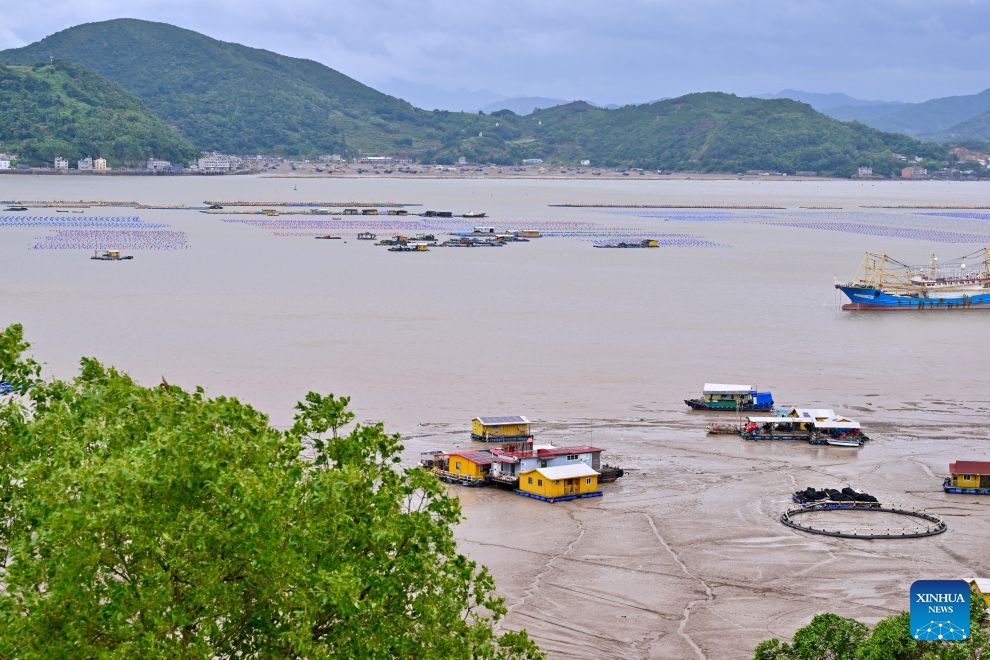
China's Ministry of Finance and the Ministry of Emergency Management have jointly allocated 40 million yuan (about 5.88 million U.S. dollars) in central natural disaster relief funds to support emergency rescue and disaster relief efforts in Fujian and Zhejiang provinces following the impact of Typhoon Bavi.
The powerful typhoon has brought torrential rainfall to parts of China's eastern coastal regions, triggering severe flooding and other disaster-related emergencies.
The State Flood Control and Drought Relief Headquarters has activated a Level II national emergency response for flood and typhoon control in Fujian and Zhejiang.
According to the Ministry of Finance, the funds will be used to support emergency flood control and typhoon response operations, with priority given to the evacuation and relocation of affected residents, emergency measures to eliminate immediate safety hazards, inspections and remediation of potential secondary disasters, and other urgent disaster relief efforts.
Bavi, the ninth typhoon of the year, is expected to make landfall along the coast between Sanmen and Cangnan in east China's Zhejiang Province in the early hours of Sunday. After landfall, it is forecast to move northwestward and then shift toward a more northerly direction.
In response to a media inquiry regarding the case involving Japanese nationals placed under compulsory measures in Dalian, Chinese Foreign Ministry spokesperson Guo Jiakun was asked to provide an update on the case and whether the individuals had been formally arrested. The reporter also asked whether, apart from the Dalian case, there had been any other law enforcement cases involving Japanese companies or Japanese nationals related to China's export control regulations, and whether China was willing to further promote bilateral economic and trade ties amid concerns that its handling of such cases had left some with the impression that it did not attach sufficient importance to China-Japan economic relations.
Guo said that the relevant case is being handled in accordance with the law. On the second question, he said the competent Chinese authorities investigate and handle criminal cases in accordance with the law, and that the Japanese side should educate and remind its nationals and companies in China to abide by Chinese laws and regulations.
"As for the China-Japan economic and trade relationship that you mentioned, I would refer you to the competent Chinese authorities. In fact, we have noted that the competent authorities have already made clear China's position on multiple occasions. We believe your impression is incorrect. China has repeatedly noted that China-Japan relations are currently facing serious difficulties, and the root cause lies in a series of erroneous remarks and actions by Japan's ruling authorities on issues concerning China's Taiwan region and military security. The responsibility lies entirely with the Japanese side," said the spokesperson.
"We also hope you will ask Japan's ruling politicians whether they can respect China's core interests and stop interfering in China's internal affairs; whether they can abide by the principles set out in the four political documents between China and Japan and uphold the political foundation of bilateral relations as well as the necessary environment for economic and trade cooperation; and whether they can reflect on and correct their mistakes and demonstrate their sincerity in putting China-Japan relations back on the right track through concrete actions," Guo said.
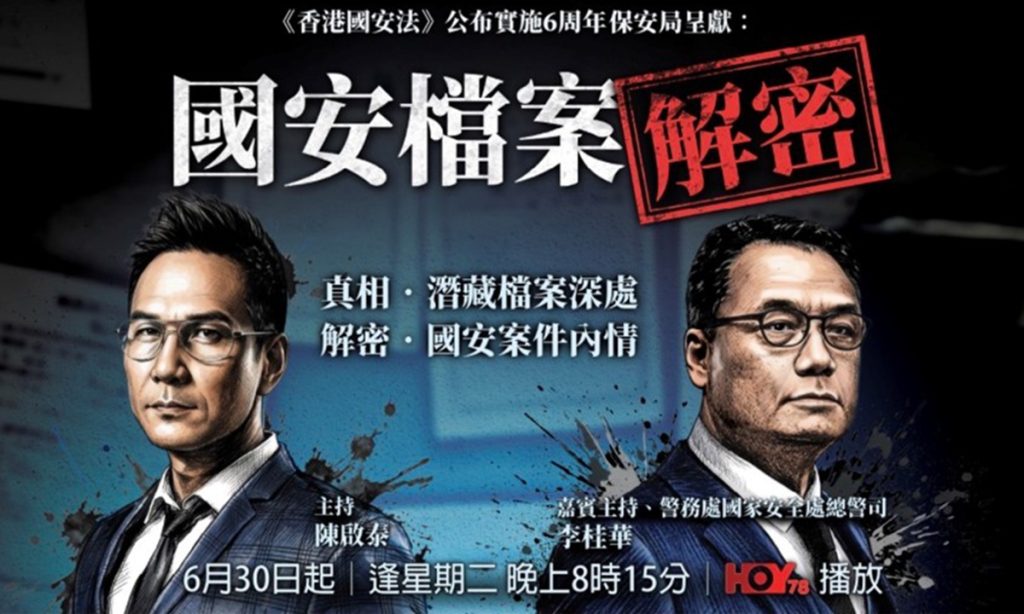
To mark the sixth anniversary of the promulgation and implementation of the Hong Kong National Security Law (NSL), the Security Bureau of the Hong Kong Special Administrative Region (HKSAR) presents NS-files: Decoded. Commencing on June 30, this five-episode television series, hosted by Ken Chan alongside guest host Steve Li, Chief Superintendent of Police of the National Security Department of the Hong Kong Police Force (HKPF), brings together leading experts to conduct in-depth analyses of key national security cases, revealing the truths behind the files.
The Hong Kong Security Bureau told the Global Times that the series is designed around major national security cases from recent years. It presents the investigative and evidence-gathering process behind these cases and analyzes the courts' rulings in a documentary format. The program demonstrates how the effective use of national security laws, together with the unwavering efforts of law enforcement agencies, has brought to justice those involved in anti-China and destabilizing activities in Hong Kong, thereby upholding the rule of law and justice.
The bureau said it hopes the program will remind the public that national security risks still exist. Safeguarding national security is an ongoing task rather than one with a definitive endpoint, and society must remain vigilant at all times.
Each episode will be uploaded to the Hong Kong Security Bureau's official Douyin account every Tuesday at around 9 pm, making the series accessible to audiences on the Chinese mainland as well, the bureau told the Global Times.
The five-episode series NS-files: Decoded reviews the cases of Tong Ying-kit, picture books of "Sheep Village" series, Tam Tak-chi, the "Returning Valiant," and "subversion under the infamous '35-plus' political strategy," according to the HKSAR government's website.
The series will be aired on HOY 78 at 8:15 pm every Tuesday, the website showed.
Observers pointed out that those cases elaborated in the series are typical national security law (NSL) cases.
The first episode that was aired on Tuesday evening featured the case of Tong.
The verdict in the case of Tong, who was charged under Hong Kong NSL and was handed down on July 30, 2021, was the first prosecution under Hong Kong NSL, according to the Xinhua News Agency. The Hong Kong High Court sentenced Tong to nine years' imprisonment after convicting him of inciting secession and terrorist activities, Xinhua said.
On July 1, 2020, Tong rode a motorcycle in Wan Chai while carrying a flag bearing what the court identified as a pro-"Hong Kong independence" slogan. He broke through three police cordons, seriously injuring three police officers.
After hearing the case, a panel of three judges designated to handle national security cases delivered its verdict on July 27, finding Tong guilty on both charges.
In their ruling, the judges said Tong displayed the flag with the intention of conveying a message of secession to others and inciting others to commit acts of secession. They also found that he deliberately drove toward police officers, intentionally challenging the police as representatives of Hong Kong's rule of law.
The court held that his actions involved serious violence, constituted a dangerous act that gravely endangered public safety, caused serious harm to society, and were intended to intimidate the public in pursuit of political objectives.
In the first episode of the series, Tong also gave an interview. He said he has since turned over a new leaf and deeply regrets his actions. Looking back, he believes the social atmosphere at the time was deeply polarized and that he had been misled by anti-government rhetoric.
Tong reflected on his personal transformation, saying that during his time in the correctional institution, he not only found the courage to become a flag raiser at the national flag-raising ceremony, but also continued his education.
In the program, he also offered advice to young people, urging them to think carefully before taking action and consider the consequences of their decisions.
In the "Sheep Village" picture books case, five defendants were each sentenced to 19 months' imprisonment for publishing seditious materials, according to local media reports in Hong Kong in September 2022.
The authorities said the books sought to indoctrinate children by promoting the false claim that China has no sovereignty over Hong Kong and that Hong Kong is not part of China. They also cited interview content in which respondents suggested "escaping" or "resisting," arguing that it was intended to provoke fear, hatred, contempt, disaffection, and disloyalty among readers, according to media reports.
The Hong Kong West Kowloon Magistrates' Courts ruled in May 2024 that 14 anti-China figures over the infamous "35-plus" political strategy, including former lawmaker Leung Kwok-hung and Helena Wong Pik-wan, were guilty of conspiracy to subvert state power.
Between July 1, 2020, and January 7, 2021, those defendants conspired with others to engage in a scheme to severely interfere with, obstruct, or destroy the lawful performance of the HKSAR government's functions by illegal means, with the aim of subverting state power.
A former Hong Kong police officer and former chairman of the Junior Police Officers' Association said the newly launched television program on national security is both timely and necessary.
Although the implementation of the Hong Kong NSL over the past six years has helped restore order, many members of the public still do not fully understand the complexity and seriousness of the national security cases that unfolded during that period, Lam Chi-wai, former chairman of Junior Police Officers' Association, told the Global Times on Tuesday.
The program's use of real-life cases, presented in a structured documentary format, enables the public to better understand that national security is "not merely a slogan, but an issue that genuinely affects our daily lives," Lam said.
Since the implementation of the Hong Kong NSL through early April 2026, a total of 394 people have been arrested in Hong Kong on suspicion of endangering national security. Of those, 208 have been prosecuted and 180 have been convicted. Anti-China figures accused of destabilizing Hong Kong, including Jimmy Lai, have pleaded guilty and been brought to justice, China Central Television reported on Tuesday.
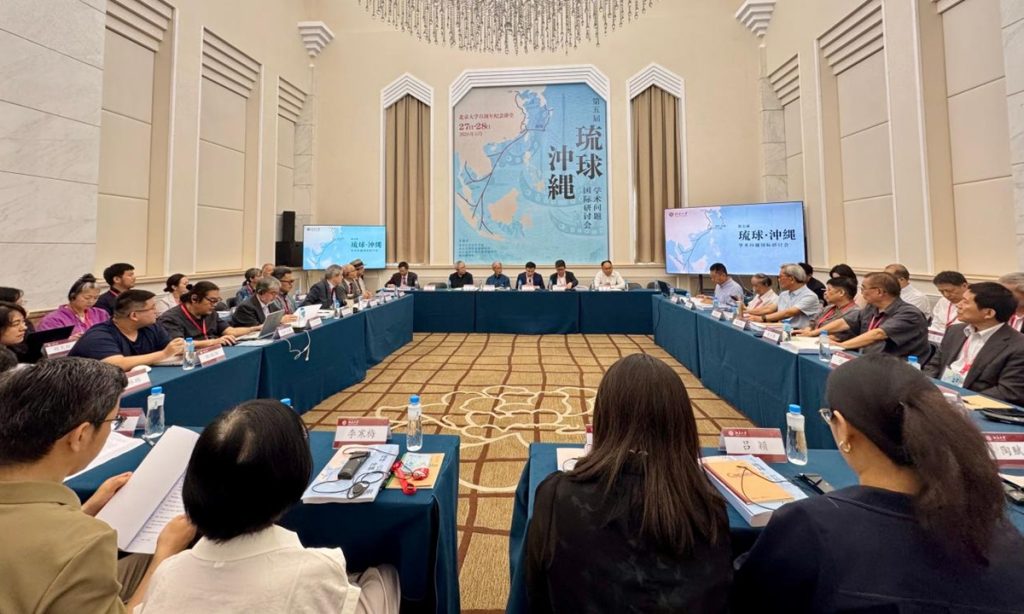
During the two-day Ryukyu-themed international symposium held from Saturday to Sunday, participating scholars called for deeper research into Ryukyu's history and culture to draw greater global attention to Japan's colonial history and its ongoing military expansion. They also stressed that the international community must remain alert to the risks of new militarism in Japan, and lend strong support to safeguarding long-term peace, prosperity and stability in East Asia.
The 5th Ryukyu-Okinawa Academic International Symposium convened at Peking University from Saturday to Sunday. Bringing together nearly 100 scholars from China and the Ryukyu Islands, the event featured in-depth interdisciplinary discussions covering a wide range of themes, including Ryukyu's history, ancient exchanges between China and the Ryukyu Kingdom, shifts in regional geopolitics, and contemporary security landscapes. Centered on charting a path for peaceful development of the Ryukyu Islands, participants also discussed the post-WWII international order in East Asia.
The symposium was jointly organized by the History Department of Peking University, the Northeast Asia Research Institute of Peking University, the Institute of Chinese and Foreign Relations History of Peking University, and the Aisixiang website.
Yang Bojiang, director of the Japan Research Institute at the Chinese Academy of Social Sciences, said in his speech that Japan has been ramping up military deployments in the Ryukyu Islands, stoking tensions across East Asia.
Blessed with a prime geographic location and abundant maritime and cultural resources, the Ryukyu Islands historically served as an irreplaceable hub for economic, trade and cultural exchanges throughout East Asia. Endowed with such natural strengths, they could well have pursued peaceful development and contributed to shared prosperity for the whole region, Yang said.
Yet clouded by the Cold War mentality, zero-sum mindset and military expansionism of certain countries, the Ryukyu Islands have lost their original orientation for peaceful development and gradually turned into a frontline of regional military rivalry.
Tang Liguo, a professor and deputy Party secretary of the Department of History at Peking University, stated at the symposium that the Ryukyu issue has long been a key research subject in international academia, boasting profound academic value and practical significance.
Amid profound shifts in the global landscape, the post-WWII international order faces unprecedented new challenges. Regional peace, prosperity and development are closely intertwined with the shared future of humanity. In-depth research on the Ryukyu issue therefore plays a vital role in safeguarding stability across East Asia and the wider world, Tang said.
The Ryukyu Islands serve as a mirror reflecting how humanity treats vulnerable civilizations, preserves cultural diversity, and builds a fair international order. Research on the Ryukyu Islands consistently serves the academic mission of restoring historical truth and upholding international justice, said Guo Qionghu, editor-in-chief of the Aisixiang website, at the symposium.
Matayoshi Seikiyo, a visiting professor at Okinawa University, voiced profound concerns over the current challenges facing the Ryukyu Islands in an interview with the Global Times. In his view, Japan's accelerated military buildup in the Ryukyus is steadily eroding the foundations of local culture, people's livelihoods and industrial development, posing grave potential risks.
"The Ryukyu Islands boast distinctive regional value. It is urgent for them to redefine their development orientation, take proactive steps to deepen exchanges and cooperation with neighboring regions and pursue shared growth together," Seikiyo said.
The Japanese government lacks basic international awareness and a sense of responsibility, and has long ignored the genuine will and legitimate demands of the Ryukyu people, said Tetsumi Takara, a professor at University of the Ryukyus.
The Ryukyu issue is by no means Japan's internal affair, but a major international matter that bears on the stability of the post-WWII international order in East Asia, Takara told the Global Times.
Over the past decade, successive Japanese cabinets led by Shinzo Abe, Fumio Kishida and Sanae Takaichi have pushed ahead with missile deployments on Yonaguni and Ishigaki islands, the islands nearest to China's Taiwan region. Tokyo also seeks to revise three key national security documents including the National Security Strategy within the year, and labels China as its "greatest strategic challenge" in the draft of the 2026 Defense White Paper, said Xu Yong, a professor in the Department of History at Peking University.
"Essentially, the emerging militarism in present-day Japan shares the same core characteristics with pre-WWII Japanese militarism. What fuels this continuity is a string of political and strategic decisions centered on controlling the Ryukyu Islands — a subject worthy of in-depth research and reflection today," Xu said.
"While we identify and criticize Japan's new militaristic tendencies, we should adopt a differentiated perspective toward the Japanese people. We should expand friendly exchanges with Japanese citizens, stand with conscientious Japanese scholars and politicians, and work to uphold overall peace and security across the Asia-Pacific," Xu noted.
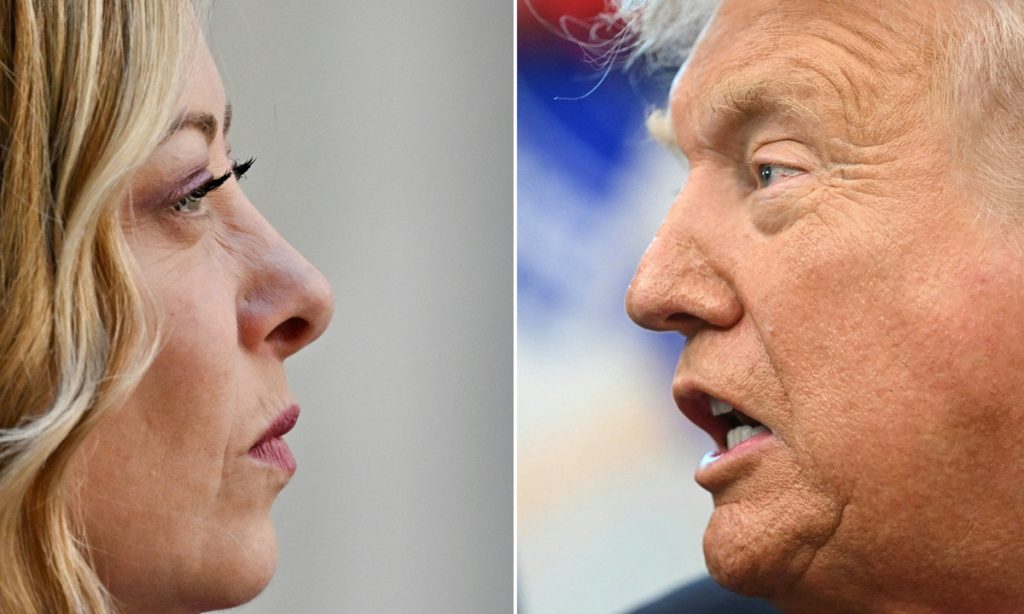
A single photograph - or, more precisely, a disputed story about who "begged" for it - has turned into the most public rupture yet between US President Donald Trump and Italian Prime Minister Giorgia Meloni, who were once seen as natural ideological allies on the Western right.
The dispute deepened in the latest round of public exchanges between the two leaders, as Meloni, on Saturday local time in Rome, sharpened her break with Trump, telling him to "focus on his own popularity" after he repeated on Truth Social his claim that she had repeatedly sought a photograph with him at the recent G7 summit in France.
Meloni rejected the remarks as "continuous and senseless attacks," defended Italy's refusal to allow the use of Italian bases or runways for US military operations linked to the Iran conflict, and insisted that Italy remains a sovereign country governed by existing agreements.
The strong reaction from the Italian side shows that the Meloni government is finding it increasingly difficult to accept the hierarchy embedded in the current US diplomacy, some Chinese observers reached by the Global Times on Sunday noted. It also marked a deeper change in transatlantic relations, they said.
The quarrel erupted after Trump, peaking in a telephone interview with Italy's La7 television channel, claimed that Meloni had "begged" him for a photograph during the recent G7 summit in Evian-les-Bains, France. According to Italian media accounts of the interview, Trump said he was not obliged to take the picture but agreed because he "felt sorry" for her. Meloni's response was immediate and unusually personal. In a video posted on social media, the Italian prime minister said Trump's remarks were "totally invented," adding that she was "frankly astonished." Then came the line that quickly dominated Italian headlines: "Neither I nor Italy ever beg."
Reuters reported on local time Saturday that underscoring how much Trump's comments have angered Meloni's government, Italian Foreign Minister Antonio Tajani pulled out of a visit to the US next week. A US-Italy business conference scheduled for Monday in Miami was also called off after Tajani cancelled his visit, the Italian embassy said.
The US State Department did not respond when asked about Tajani's cancelled trip, per the Reuters report.
The scene had an almost theatrical quality: a leader who had once invested heavily in her relationship with Trump now standing before Italians to deny that she had sought his favor, the AP reported. "Certain things deserve an immediate response," Meloni said, according to media reports of her video remarks. She questioned why Trump behaved in such a manner toward allies and said it "was a shame he doesn't show the same resolve toward the enemies of the West, toward the enemies of the US," the AP reported.
Trump did not retreat. On Saturday he doubled down on Truth Social, again saying that Meloni had repeatedly sought a photo with him and suggested that she wanted to repair relations with Washington to improve her standing at home. Reuters reported that Trump also criticized Italy for not allowing the US to use Italian bases or runways in connection with the conflict with Iran, calling the refusal a logistical problem for Washington.
Trump initially misspelled Meloni's first name as "Gigiorgia," according to Reuters and Italian media. Trump wrote "Italian Prime Minister Gigiorgia Meloni…" and "He misspelled her first name in the initial post, which he later corrected," AP reported.
Meloni's second response was sharper still. Writing in English on Instagram, she dismissed Trump's "continuous and senseless attacks," rejected the idea that her popularity depended on his friendship, and told him to focus on his own ratings rather than hers. She also defended Italy's position on military bases, stressing that their use is governed by existing agreements and cannot be changed at will. "As long as I am prime minister," she said, Italy would remain a sovereign nation.
Chen Hong, Director of the Country and Region Studies Institute at the School of Foreign Languages, East China Normal University, told the Global Times that the controversy appears on the surface to revolve around a disputed photo opportunity, but in fact reflects a deeper change in transatlantic relations.
Trump tends to personalize alliance relations and use personal influence to highlight US dominance, he noted. But in the current European political environment, such an approach is increasingly likely to trigger backlash, especially against the backdrop of Washington bypassing Europe and unilaterally pushing military action against Iran.
European dimension
The dispute also drew support for Meloni from elsewhere in Europe. Spanish Prime Minister Pedro Sánchez said after an EU summit in Brussels on Friday, that he had expressed "all my solidarity" with Meloni at the European Council, describing Trump's remarks as an attack that was "neither political nor personal."
Belgium's Defense Minister Theo Francken was even more direct, writing on X that "the insults from the White House need to stop" because they "divide the West and achieve nothing," and adding that Washington should "leave @GiorgiaMeloni alone."
Jiang Feng, a senior researcher at Shanghai International Studies University and president of the Shanghai Regional Studies Association, told the Global Times that the episode reflected a broader shift in Europe's attitude toward the US.
European leaders, he said, are adjusting their approach on the basis of realism, moving away from an almost one-sided emphasis on values-based strategic alignment with Washington toward a more pragmatic, transactional mode of cooperation.
European governments are increasingly judging their ties with Washington case by case, weighing their own interests and dignity. Europe still objectively depends on the US in many areas, Jiang said, citing the war in Iran, but it [Europe] has also come to realize that the US is not always able to get its way.
Europe has neither the capacity nor the willingness to completely break away from the US. However, more and more European countries are unwilling to continue accepting a condescending American style of leadership, Chen said. That is why a dispute on social media could quickly evolve into a political event involving national dignity, alliance relations and Europe's strategic positioning.
Dramatic turn
The episode marks a dramatic turn in a relationship that, not long ago, seemed politically useful to both leaders. Meloni had been portrayed in Washington as a European conservative who could speak Trump's language while still dealing with the European Union and NATO. The Washington Post described her as having once been labeled Europe's "Trump whisperer." But the same report noted that the war in Iran had turned that friendship into a liability for her.
From Meloni's personal political perspective, Chen said the incident has also offered her an important political opportunity. Over the past few years, Meloni has been seen as one of the European right-wing leaders closest to Trump. In the early phase of Trump's return to power, this identity was once viewed as an important advantage for Italy in gaining access to US policy resources and influence. But as the US administration continues to pursue an "America First" agenda and adopts a transactional attitude toward European allies, that closeness has begun to produce negative effects.
Reuters offered a similar reading, describing the transformation as one from "Trump whisperer" to "Trump basher." The report noted that tensions had already been building before the G7 photo dispute, especially over Italy's position on the Iran conflict and Rome's reluctance to be drawn into US military operations. In April, Reuters reported that Trump had publicly rebuked Meloni after she criticized his remarks about Pope Leo XIV, another moment that strained the image of ideological harmony between the two leaders.
Italian media treated the clash not simply as a diplomatic embarrassment, but as a test of national standing. Sky TG24 highlighted Meloni's declaration that "Italy does not beg" and documented the wave of reactions from Italian political leaders. Corriere della Sera focused on her reply to Trump's renewed attacks, particularly her insistence that Italian sovereignty and existing military agreements must be respected. RaiNews emphasized Trump's suggestion that Meloni wanted to be "friends again," while also noting the symbolic awkwardness of his initial misspelling of her name.
Some Italian commentary went further, portraying the episode as a degradation of diplomacy itself. La Repubblica columnist Stefano Bartezzaghi wrote that the Trump-Meloni exchange resembled "kindergarten" behavior rather than statesmanship.
US media also saw the clash as more than a personal feud. Axios described the dispute as a social media "war of words" between the "one-time friends," adding that close allies are increasingly willing to split with him.
Li Haidong, a professor at China Foreign Affairs University, told the Global Times that Europe's dissatisfaction with the US is moving from the surface to a deeper level.
While the current dispute is being expressed through verbal clashes between Italian leader and the US president, the deeper reason is that European countries increasingly believe the US no longer has sufficient capability, resources or commitment to provide the security guarantees Europe needs, Li said.
European countries are realizing that they can better safeguard their own security only by relying more on themselves and by strengthening coordination among European states, Li said.